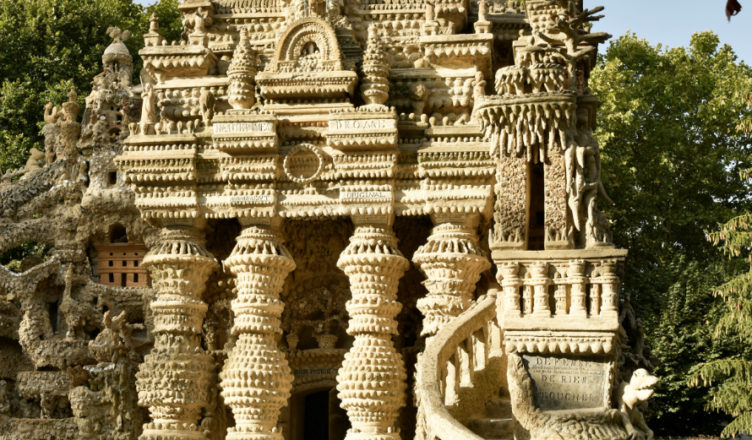
In 1879, French postman Ferdinand Cheval stumbled on a strangely shaped stone during his mail route. Most would have kicked it aside. He picked it up—and began collecting more.
He had no training, no money, and no blueprint. But he had a vision.
Each night, after finishing his long rural delivery route, Ferdinand worked alone in his garden. Using only his hands, he began to build a structure unlike anything anyone had ever seen. Inspired by nature, myths, and temples from across the world, he stacked stones, carved sculptures, and built towering columns.
For 33 years, people mocked him. “Crazy man with a rock pile,” they called him.
But he kept building.
What emerged was the Palais Idéal—a fantasy palace complete with towers, fountains, and mosaics. Today, it’s a national monument visited by over 150,000 people a year. Artists like Picasso and André Breton praised its wild genius.
Ferdinand once said, “I wanted to show that a simple man could do something incredible.”
He proved that belief, persistence, and imagination can turn stones into art—and mockery into legacy.