If you like the solar system and keep up with the latest news about the cosmos and everything related to it, you will enjoy this post.
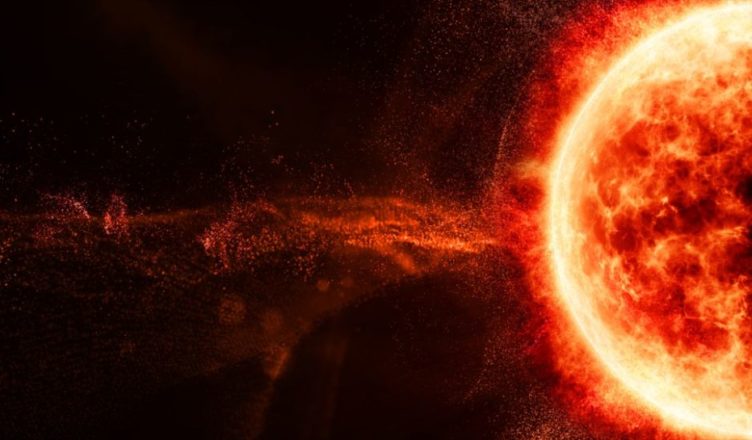
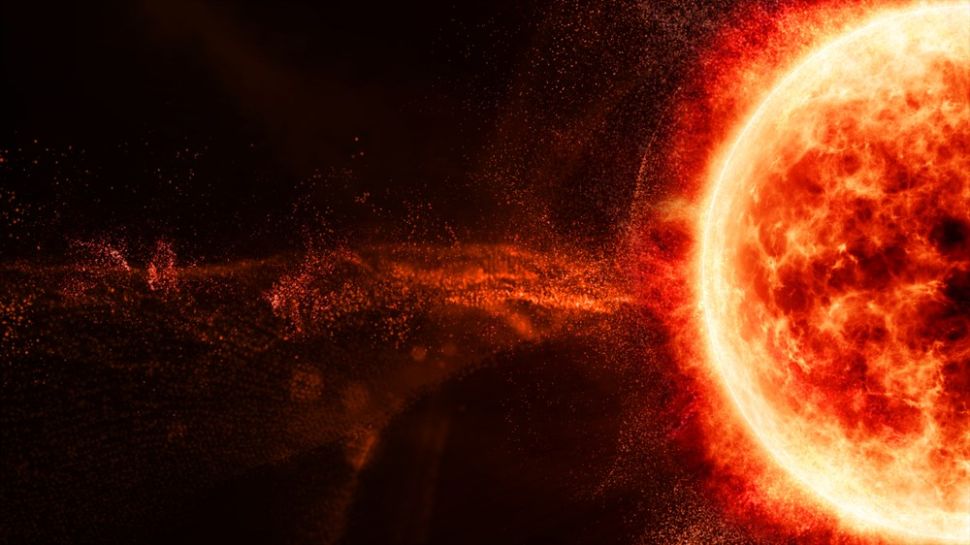
This time, scientists were shocked to find out that a solar storm that could be very dangerous is coming toward Earth without warning.
This solar storm impacted Earth before midnight UTC on June 25 and continued till the next day. It was classified as a G-class storm by scientists. In other words, it is strong enough that it could cause slight changes in the power grid, storna auroras, and make it hard for satellites to work.
The sudden solar storm occurred at the apex of an exceedingly uncommon five-planet alignment (which hasn’t occurred since 1864), in which Mercury, Venus, Mars, Jupiter, and Saturn lined up in the sky in order of their closeness to the sun. The photobombing aurora borealis made it possible for amateur astronomers in the northern hemisphere to take pictures of the planets.
Photographer Harlan Thomas got an image of spectacular auroras flashing across the early sky in front of the celestial conjunction on June 26 near Calgary, Canada.
“Wow, talk about a pleasant surprise,” Thomas said to Spaceweather.com. “The aurora was seen with gorgeous pillars,” Thomas recalled, and lasted for 5 minutes.
According to Spaceweather.com, scientists first assumed a coronal mass ejection (CME) produced the odd storm—a big burp of plasma with an imbedded magnetic field belched out from a solar spot—but they couldn’t identify whether it happened on the Earthside or the farside of the sun.
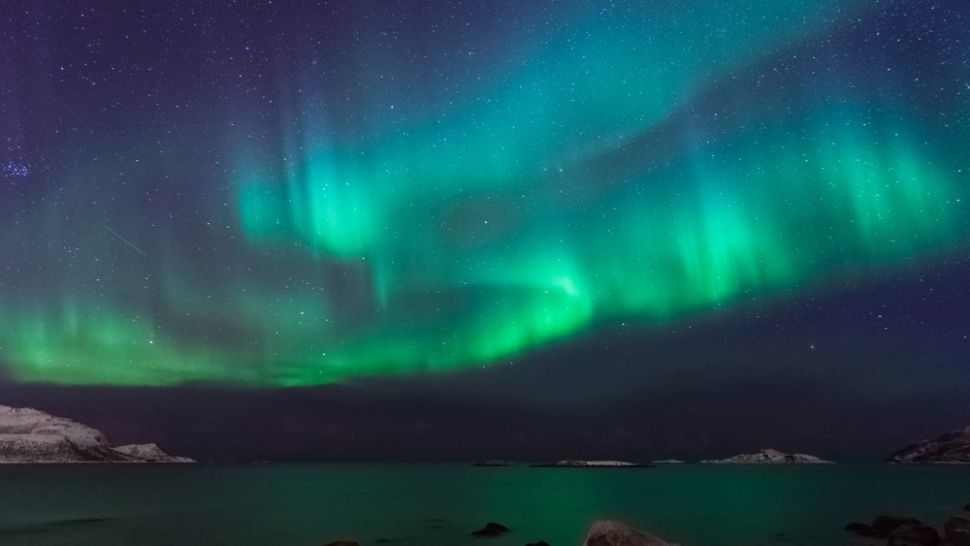
Auroras arise when energetic particles from the Sun collide with oxygen and nitrogen molecules in the Earth’s upper atmosphere, ionizing them and causing them to shine. Ordinarily, auroras occur in areas around the North and South Poles where the Earth’s magnetic field is strong. It typically deflects these particles and is the lowest. Auroras may grow brighter and more visible at even lower latitudes during solar storms. In November 2021, a huge solar storm lit up the sky in places as far south as Pennsylvania, Iowa, and Oregon in the United States.
Originally published on Live Science.