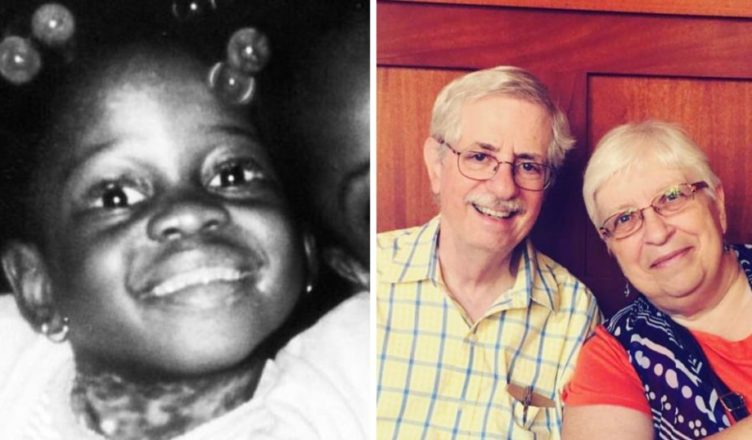
Michaela DePrince’s life story is quite inspiring.
She not only overcame every challenge thrown her way, but she also proved the phrase “don’t judge a book by its cover” to be true!

Michaela DePrince was born in Sierra Leone in 1995 under the name “Mabinty Bangurawas.” She was raised in an orphanage after both of her parents were killed in the country’s civil conflict shortly after her birth. The orphanage was the beginning of DePrince’s nightmare.
DePrince had vitiligo, a condition in which the skin loses its color due to the death of pigment-producing cells. As a result of the condition, DePrince’s neck began to develop white spots, and her neighbors constantly mocked and called her names. “Mabinty,” the other girl with the same name as her, was the only person she knew.

She was dubbed the “Devil’s Child” due to her condition, and no one wanted to adopt her. They graded us, DePrince said, recalling her orphanage experience. The favorite was the child number one, and the least favorite was the child rated 27. My lucky number was 27.
They constantly asked her, “Why would anyone want to adopt the devil’s child?” she told Today.

DePrince suffered from neglect for a lot of her days, which caused her to go without food and starve. Until she haphazardly came across a photo of a dancer in a magazine, her life appeared dismal.
In interviews, she admitted, “It wasn’t only that she’s a dancer. It’s that she seems content. And if what she was doing made her happy, I wanted to make her happy too, she said.
Again tragedy occurred when she was three. Rebels stabbed 3-year-old Michaela in the stomach.

But she was going to get some bad luck. In order to adopt Michaela’s buddy Mabinty, an American woman was traveling to Africa. The orphanage called Elaine to explain which “Mabinty” she intended to adopt because there was uncertainty on their end.
Elaine DePrince chose to adopt both the children and gave them the names “Michaela” and “Mia” after learning that Michaela was an orphan who had already been rejected 12 times. After signing the paperwork, she notified her husband that she was adopting two girls.

The DePrinces had prior adoption experience. The couple had previously adopted three children from other countries. Their three adopted sons all have hemophilia.
Elaine was acutely aware of the additional attention her sons required from her. However, calamity struck when HIV was discovered in their blood product. Because there was no therapy for the condition at the time, the family lost all three of their sons.

This motivated them to adopt again. Michaela DePrince, then four years old, was adopted by the couple in 1999. As soon as she was adopted, she told her adoptive parents about her ambition to dance.
DePrince’s adoptive parents were excited about her love to dance. Elaine DePrince and her husband encouraged her hobbies and drove her to dance lessons. Michaela needed some time to adjust to their unfailing support and love.

Michaela remembers being terrified that her new life would be lost. She admitted in an interview that she once had to keep the light on while she slept. Simply put, I was afraid that if I switched it off when I woke up, I would be back in the orphanage.
DePrince was motivated by her desire to disprove all doubters. But even in America, she ran into some problems.

She noticed that her skin condition was interfering with her dance career. Elaine DePrince advised Michaela to persevere, explaining that her white spots were actually pixie dust.
Michaela has promised to dedicate all of her performances to her adopted father, who died in June 2020. In a poignant tribute to her father, she wrote that her future spouse will have high standards to live up to because of the example her father had established for her.

She was able to overcome her concerns thanks to her adoptive parents’ love and acceptance, and she is today a well-known artist known all over the world for her dance abilities!
“You know, we don’t put a lot of effort into the black ballerinas because they all end up getting overweight and having large boobs,” my teacher informed me when I was eight years old. DePrince was informed.
Michaela, on the other hand, was not about to let an uneducated teacher decide her fate. She persisted, and her great career was the consequence of her many years of sacrifice.
At the age of 17, she began her career with the Dance Theatre of Harlem in New York City.

Watch her amazing performance here: