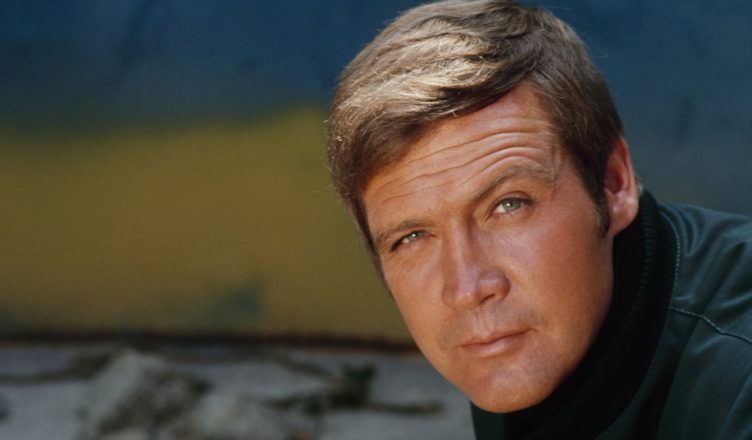
Since the 1960s, Lee Majors has been a significant figure in the cinema and TV industries. He is most known for his roles in movies such as “The Big Valley,” “The Fall Guy,” and, most memorably, “The Six Million Dollar Man.” Majors, on the other hand, has featured in a slew of additional works in the action-adventure genre, showcasing more of his versatility.
Despite experiencing loss and having to face several challenges throughout his life, Majors has never given up on his dreams and objectives. The celebrity has persevered throughout the years, even as he grew older and has continued to find jobs in the sector of his passions. Majors had planned to become an athlete or an athletic coach, but destiny had different ideas for him, and he changed jobs to become an actor.

Majors worked as a stuntman and had minor appearances in television series before landing his big break and making acting a full-time profession and a long-term career. As he proceeded to secure gigs, the guy swiftly rose to the status of action star. Majors was eventually able to show off more of his personality and other abilities, such as singing and voice work, by taking on parts in other projects.
Despite several hurdles along the road, Majors never ceased working hard to achieve his objectives. He’s been in the entertainment business for well over 50 years and still looks as wonderfully attractive as he did in “The Six Million Dollar Man.”
Majors was born on April 23, 1939, as Harvey Lee Yeary in Wyandotte, Michigan, a Detroit suburb. When both of his parents died in separate incidents before he was two years old, he was forced to learn a lot about the grief process immediately. His father passed away before he was born in a work accident, and his mother died in a vehicle accident when he was 16 months old. Mildred and Harvey Yeary, Majors’ aunt and uncle, adopted him when he was two, and he moved live with them in Middlesboro, Kentucky.

Majors showed early promise by taking part in many school activities and doing well in school.He ran track and played football at Middlesboro High School before graduating in 1957 with a football scholarship to Indiana University. Despite this, Majors chose to move to Eastern Kentucky University in Richmond, Kentucky, in 1959.
Once more, the promising athlete was dealt a blow when he sustained a back injury while playing football, leaving him entirely immobile for two weeks and thus ruining his athletic career. This injury inspired Majors to pursue new interests, and he became bitten by the acting bug. While still in school, he started acting in plays at the Pioneer Playhouse in Danville, Kentucky. He went to college and got degrees in both history and physical education in 1962 because he wanted to be a football coach one day.
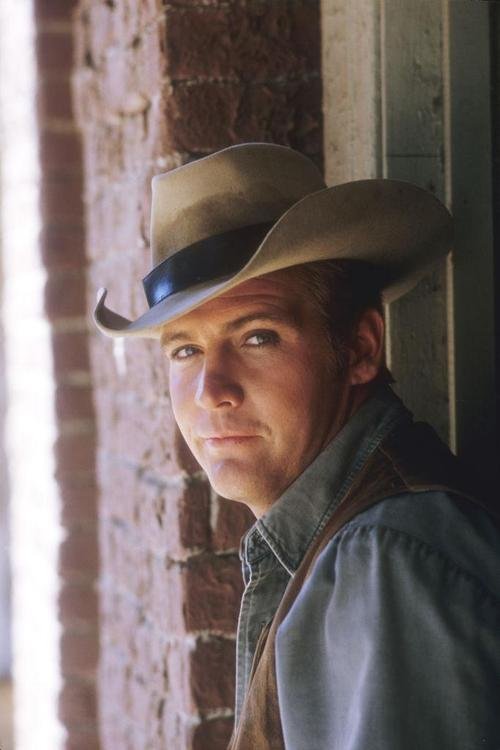
Everything looked to be going well for Majors, who had regained his agility after recuperating from a terrible injury. He turned down a chance to test out for the St. Louis Cardinals football club in order to go to Los Angeles, California. Majors was able to serve as the Recreation Director for the North Hollywood Park and meet many significant individuals in the entertainment business, including actors and other industry professionals, while there. Around this time, Majors got his now-famous stage name as a tribute to Johnny Majors, a player and later coach at the University of Tennessee.
Majors started acting soon after, landing his first part in “Strait-Jacket” in 1964. Majors persevered despite the fact that the performance was unacknowledged. He continued auditioning and striving to make acting a full-time job, and landed small roles in “Gunsmoke” and “The Alfred Hitchcock Hour” in 1965.
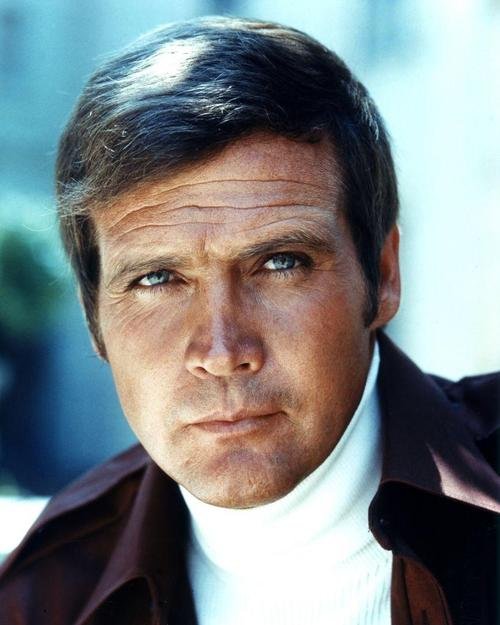
Majors quickly regained his groove and landed his big break in the ABC western series “The Big Valley.” The program was an immediate success, and it helped Majors gain additional acclaim and reputation as an actor. “I did an audition for ‘The Big Valley’ with around 500 other people, then they narrowed it down, so I performed a screen test, as did Burt Reynolds, Roy Thinnes, and Dennis Hopper, and then they married it down some more,” Majors told Den of Geek in 2015. Then I had to do another, this time with a young actress to see if she could portray my sister. After that, I assumed I’d gotten the role. ”
Majors had a great connection with the character because it reminded him of the difficulties he had to endure as a youngster. My mother was eight months pregnant with me when my true father was slain in the steel mills of Michigan; then my mother was killed when I was 16 months old, driven over by a drunk driver on her way to work as a cleaning woman at a hospital,” he said. “This is when I was transferred to Kentucky to live with some distant cousins who raised me as my mother and father. This instilled in me the determination to build a name for myself, as well as the fortitude to face challenges and persevere. ”
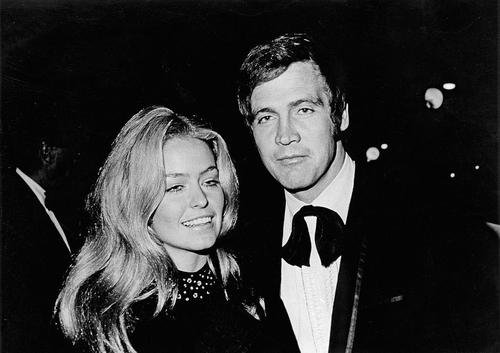
Majors’ career was exploding as the star landed more and more assignments. In 1968, he co-starred in “Will Penny,” and in 1969, he played the lead in “The Ballad of Andy Crocker.” He worked on “The Big Valley” until it was cancelled in 1969. When one door closed for Majors, another one opened, and soon after his most popular show ended, he got a deal with Universal Studios.
As time passed, other possibilities presented themselves, and Majors was greeted with yet another performance that would catapult his career to new heights. In 1973, he was cast as USAF Colonel Steve Austin, a former astronaut with bionic implants, in the film “The Six Million Dollar Man.” It began as a television movie on ABC, but the network extended it and made it a weekly series the next year.
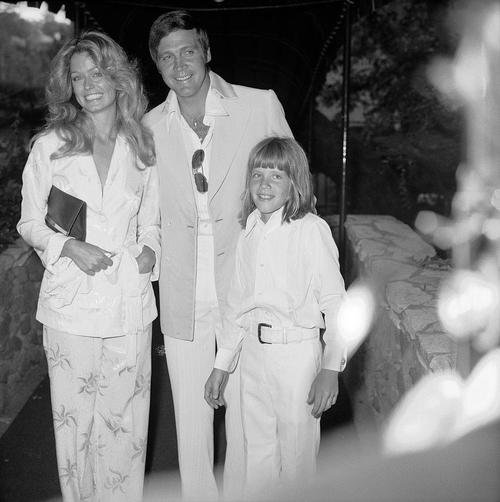
“The Six Million Dollar Man” was a huge success, receiving worldwide publicity and appreciation from audiences in over 70 countries. Although Majors had been in the field for a few years before this time, the series was a watershed moment in his career, catapulting him to the status of pop superstar. Majors had a few concerns with Universal Television when he wanted to renegotiate his contract owing to the show’s great popularity, but it all worked out when the show’s ratings started to fall, eventually leading to its cancellation in 1978.
The actor continued to work until the 1980s, when he was cast in a long-running television series for the second time. Majors landed the main part in “The Fall Guy” in 1981, as Colt Seavers, a Hollywood stuntman who moonlighted as a bounty hunter. The actor was more visible than ever in the series, since he also served as its producer and director. He even sang the theme song, demonstrating yet another ability. The show was a huge hit and lasted five seasons.
Majors quickly returned to his role as “The Six Million Dollar Man,” as he and Lindsay Wagner, one of the stars of “The Bionic Woman,” co-starred in three crossover films in the 1980s that included both of their characters. The Majors also appeared in “The Last Chase,” “Starflight: The Plane That Couldn’t Land,” and “Scrooged” in the 1980s.

Nothing could stop Majors from reaching the pinnacle of success, and his career easily continued throughout the 1990s and 2000s. During this period, he embarked on new projects and was able to exhibit more aspects of himself via his art. Majors provided the voice for the computer game “Grand Theft Auto: Vice City” in 2002, as well as the animated children’s show “Wapos Bay: The Series.” Majors also appeared in “Ben 10: Race Against Time” and a music video for “When We Die” by the band Bowling For Soup in 2007. One of his most memorable performances was as Coach Ross on the CW’s “The Game,” which aired from 2006 to 2009.
Despite his rigorous work and lifestyle, Majors managed to find time for love. In 1961, he married Kathy Robinson and had one kid with her, Lee Majors, Jr. His son went on to become an actor, appearing in three “Six Million Dollar/Bionic Woman” television movies opposite Majors. After a brief marriage, Majors and Robinson divorced in 1964.
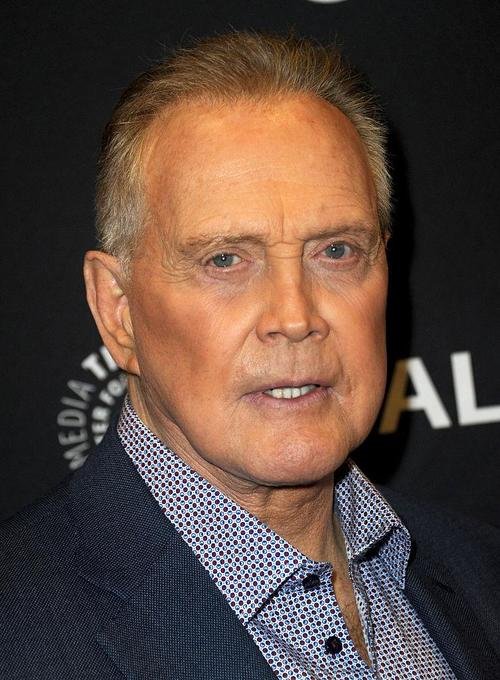
Majors did not allow sadness to stop him from discovering his one true love, and on July 28, 1973, he married Farrah Fawcett. Sadly, the two were not destined to be together, and they divorced in February 1982, only a few years later. Their marriage did not endure, but their romance lives on in the song “Midnight Train to Georgia.” Despite knowing Fawcett and Majors, the lyricist, Jim Weatherly, utilized them more as ideas for the characters in the popular song. Gladys Knight & The Pips subsequently recorded the song.
Majors married Playboy Playmate Karen Velez in 1988 to see whether three times was the charm. Before divorcing in 1994, the couple had one daughter, Nikki, and two boys, Dane and Trey.
In an interview with Den of Geek in November 2015, Majors reminisced on his early days, his lengthy career, and some of the most important roles he’s played over the years. “Sometimes I remember it warmly, and other times I think, ‘Boy, that was a lot of hard work.’ They ran over my buttocks,” Majors said. “I probably did 85% of my own stunt work, and now I believe I’m on the verge of a knee replacement; it’s causing me some problems.”
Despite the fact that his physical talents were no longer what they once were, Majors remained upbeat as he reflected on the fact that he had played several great parts back to back. “Back then, there were probably 18 or 19 western shows on the air, and we only had three networks,” Majors noted. “However, it was really competitive.”
Despite his status as an action star and stuntman, Majors was determined to play family-oriented roles in family-friendly programs. “Most of my episodes and series were family-oriented,” he said. “Everyone would congregate around ‘Six Mill,’ and anybody could see the spectacle. The same might be said about “Fall Guy” and “Big Valley.” There was never much carnage, none of the explosions you see in movies nowadays, none of the blood and guts and everything.

The programs Majors worked on represented his personal life. “I grew up attending church in Kentucky… that’s simply the way we were raised,” he said. “I had to attend church on Sunday.” Majors persevered despite poor origins and difficult challenges to prominence. Throughout his illustrious career, he had various setbacks, but he never let them stop him. Majors’ counsel to young performers exemplifies his tenacious approach and resolve to never give up. “Once your foot is through the door, don’t let it slam on you,” he said.
Despite the fact that the parts were generally minor or just cameos, Majors kept working throughout the late 2000s and early 2010s. He returned to his role as Steve Austin, but this time as a voice actor in a 2009 episode of “Robot Chicken.” Majors had a brief recurring role in “Raising Hope,” appearing in three episodes over the span of three years. In 2019, he voiced Jeff Tracy in “Thunderbirds Are Go,” which was one of his most recent roles.
Majors was regarded as an action hero and was adored by many for his endearing appearance, impressive abilities, and friendliness. The 82-year-old actor looks as good as ever and is still a household figure. He is presently married to actress and model Faith Cross, with whom he has been happily married since November 1, 2002. Majors has done it all while remaining true to himself and gaining the hearts of many even as his career has stalled.
What are your current thoughts on Lee Majors? Please let us know, and don’t forget to share this with your relatives and friends to find out what they think!