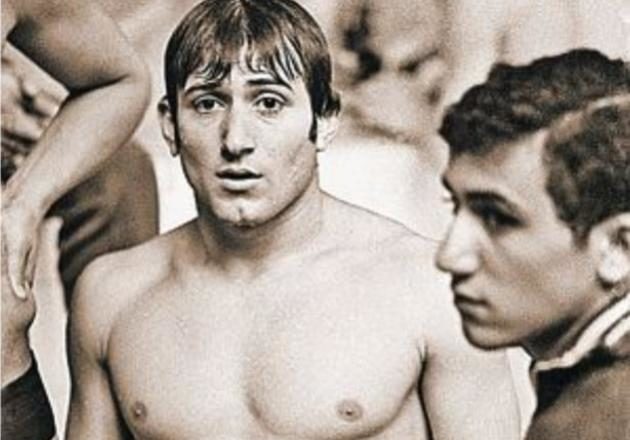
He was a 17-time world champion, a 13-time European champion, and a seven-time Soviet champion. World Record holder eleven times This fascinating person has a long history of saving people’s lives while also facing his own death.
He got into a confrontation with a gang of hooligans when he was 15, and after beating him, they wrapped a big stone around his neck and dumped him into a lake. He began moving his body under water and managed to break the ropes from his hands, following which he swam to the surface, free of the stone on his neck. He stated in an interview:
“I wouldn’t be able to get out of the water if the stone was somewhat heavier.”
This incident inspired him to enroll in swimming classes. He appeared to be so gifted that he began competing at a professional level. He became Armenia’s champion at the age of 17 after teaching himself without the assistance of a trainer. He began to outperform his popular peers, but envious trainers cut him from the national squad. The young swimmer had a difficult time, but he did not give up on his dream. He switched to finswimming and became the “master of sports of the Soviet Union” in 6 months, the “master of international class” in 8 months, the Soviet Union champion in 12 months, and the European champion in 14 months by breaking the world record.
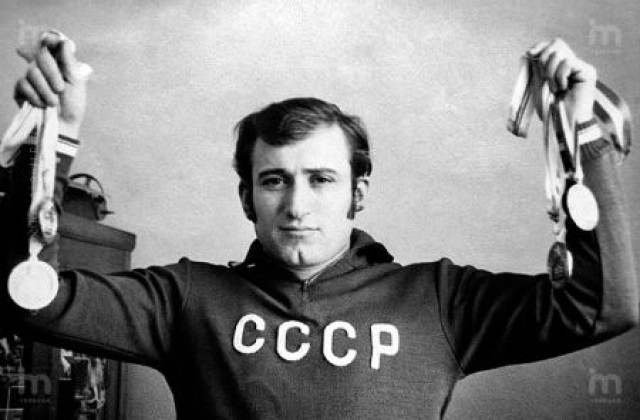
During one of his competitions in Kiev, a rival competitor opened his oxygen tank and let a large amount of oxygen out, causing him to lose the competition. Despite this, he continued swimming, losing oxygen and having to hold his breath for 75 meters. He lost consciousness after feeling his life slip away, but he won the event and was promptly hospitalized. He recalls hearing about his victory only in the hospital.
In 1974, Shavarsh was riding the morning bus to the swimming pool when his fortitude was challenged once more. During the ride, the driver lost control of the bus on a steep section and was on the verge of driving straight off a precipice. Shavarsh leaped into the driver’s seat and was able to turn the bus away from the oncoming drop, which was barely half a meter from the cliff’s edge. He saved 30 people, including himself, on that dreadful day.
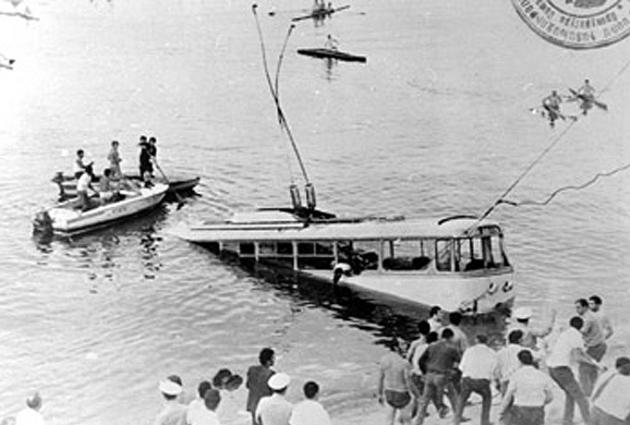
Two years later, fate struck once more. On a frigid morning in September 1976, he was running beside the dam in Yerevan (Armenia) when a huge trolleybus carrying 92 passengers lost control and flew off the road into the freezing water. The majority of the passengers became unconscious at the impact, and the bus sank around 10 meters deep. Shavarsh jumped into the frigid water to save people without hesitation. Shavarsh used his feet to crack the back window of the trolleybus while diving to a depth of 10 meters. He rescued the lives of 20 people, one by one (he actually pulled out more than 20, but not everyone made it). He spent about 20 minutes in the freezing water and made 30 dives to the wreckage. As Shavarsh carried the injured to the surface, his brother, Kamo Karapetyan, a swimmer, took care of them.
Shavarsh passed out after his 30th dive. This brave gesture cost him dearly; he contracted severe 2-sided pneumonia and blood pollution as a result of the dirty water. Doctors were skeptical that Shavarsh would ever recover. While he was asleep for 46 days, his life was hanging by a thread. Shavarsh recovered, but his professional career was ended. Experts today believe that no one else could have done what Shavarsh has done. Bystanders who saw Shavarsh assist victims to the surface reported that his feet and back were covered in glass shards. When asked subsequently what the most terrifying aspect of this occurrence was, Shavarsh replied:
“I was frightened to make a mistake since I knew I could only rescue so many lives.” I couldn’t see anything because it was so dark down there. On one of my dives, I inadvertently grabbed a seat rather than a passenger… Instead, I could have saved a life. “That seat still haunts me in my dreams.”
He had long-term inflammation, blood poisoning, and extreme nervous weariness. Nonetheless, he competed for the final time and smashed the world record for the 11th time. Physical and psychological strain eventually caught up with him, forcing him to retire from the sport. He had a strong aversion to water after that and moved to work in electronics manufacturing. He claimed he didn’t want to go near the water again.
Karapetyan’s success was not immediately recognized due to Soviet politics. On October 12, 1982, Komsomolskaya Pravda published an article on his feat titled “The Underwater Battle of the Champion,” which made him a household figure in the USSR. This newspaper exposed him as the saviour, and he received over 75,000 letters as a result.
When asked about his run-ins with fate, he replied:
“Something above is directing humanity, you know, something is guiding us.” I had to attend the World Championships in Hannover at the time. But for some reason, my visa was not available, and while I frequently won, they didn’t grant me one in time for the tournament, so I left bitter and went to training when the crash occurred.
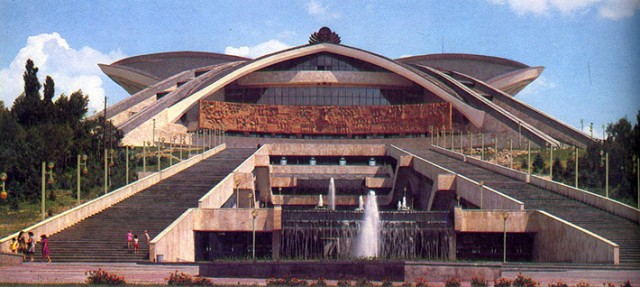
His bravery does not stop there. Shavarsh happened to be near a burning structure (the famous Soviet Armenian sports hall) with people trapped inside on February 19, 1985. He ran in and began bringing people out without hesitation. He was gravely injured yet again. He had inhaled hazardous gases and thereby lost consciousness. Everyone assumed he had died, but a nearby cab driver saw a feeble pulse and brought him to the hospital. He was in the hospital for a long time recovering from severe burns and smoke inhalation.
Karapetyan was later given the Order of the Badge of Honor and a medal “For the Rescue of the Drowning.” He was also honored with a UNESCO “Fair Play” medal for his bravery. Nikolai Chernykh discovered and named 3027 Shavarsh, a main belt asteroid.
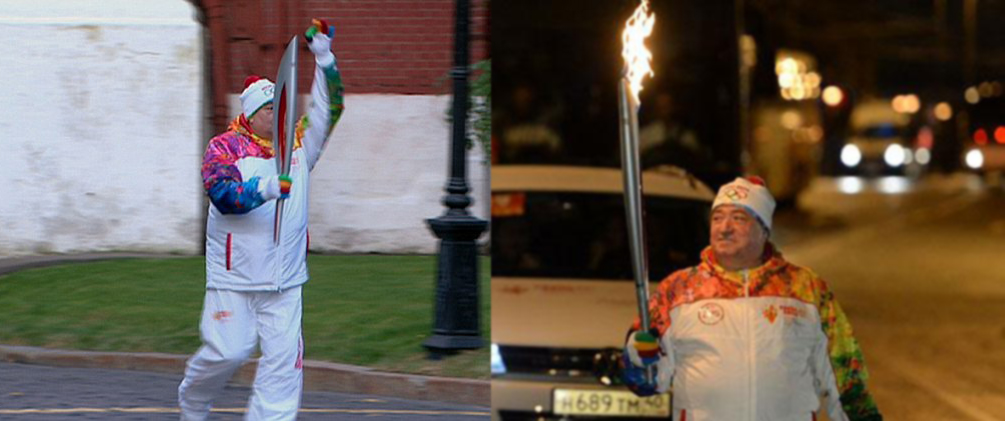
Recently, Karapetyan was granted the honor of taking part in the 2014 Winter Olympics torch relay for the second stage of the race. He was given the torch in Moscow and had to carry it towards Krasnogorsk. During his run in Moscow, the Olympic fire, however, suddenly went out. It was reinstated, but this led to much ridicule from western media outlets, eager to slam the Olympics held in Russia. On the next day, he was allowed to carry the torch for a second time, making him the only person in Olympic history who carried the Olympic torch twice in the same event.
Shavarsh has been living a humble life since 1993. He owns and operates the Moscow shoe store “Second Breath.” He travels to Armenia and the Nagorno-Karabakh Republic on a regular basis. In a recent interview, he stated:
“I was carrying the Russian and Armenian flags.”
This is the amazing true story of a real-life superhero named Shavarsh Karapetyan.