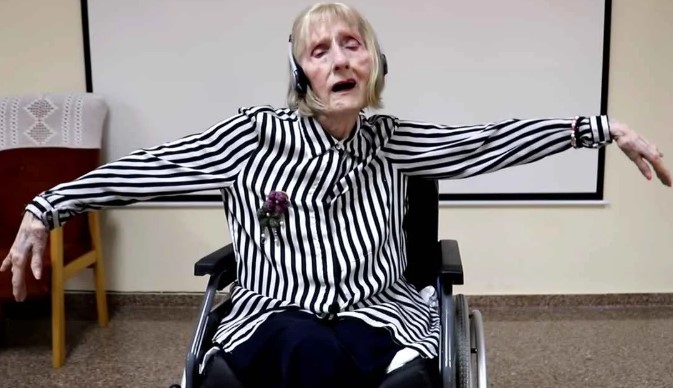
Music has emerged as a miraculous healer in the arena of Alzheimer’s disease, delivering a glimpse of hope among the memory loss that frequently afflicts its patients. The inspiring story of Marta C Gonzalez, a former dancer who, despite having Alzheimer’s, rediscovered the pleasure of dancing while listening to Tchaikovsky’s Swan Lake, recently underlined its therapeutic ability.
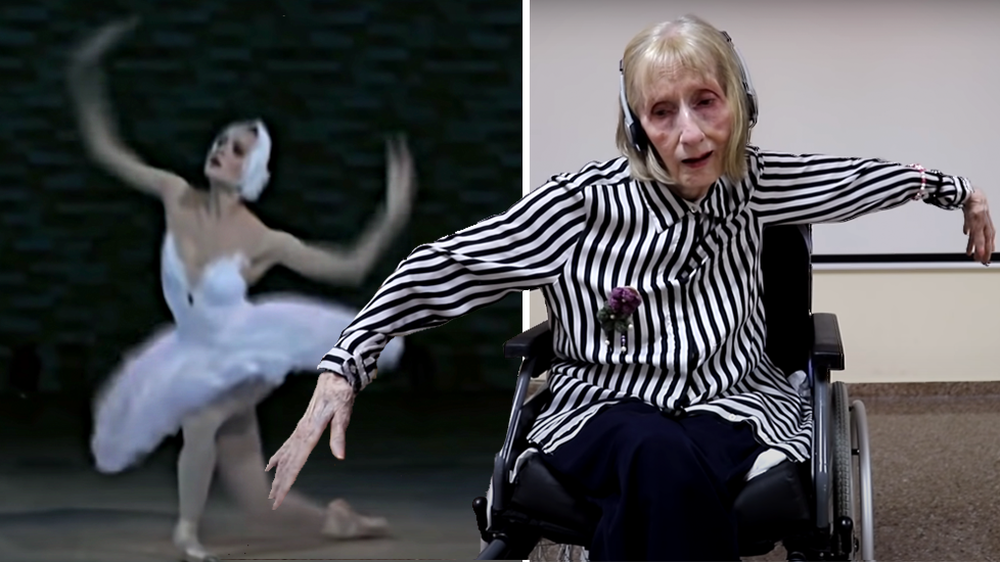
Marta C Gonzalez, a once-prima ballerina whose exquisite steps adorned the stages of the 1960s, had innumerable times performed Tchaikovsky’s Swan Lake throughout her distinguished career. Marta died in 2019 when Alzheimer’s brutally took those treasured memories. Her amazing affinity for music, however, lasted.
A viral video, captured by the music therapy group “Música para Despertar” (Music to Wake Up To), showcases the poignant moment when Marta, on the brink of her passing, rekindles her long-forgotten ballet moves upon hearing a familiar tune.
In the video, Marta C Gonzalez, adorned with headphones, immerses herself in Tchaikovsky’s Swan Lake. Suddenly, her hands begin to move with a grace that only a seasoned ballerina could command. It’s a heartwarming moment as the former prima ballerina recognizes the song, a testament to the enduring power of music.

Though confined to a wheelchair, Marta’s upper body comes alive, mirroring the elegant movements she once performed with youthful vigor. As she completes her impromptu performance, the room erupts in applause, and Marta’s emotions overflow.
This touching video, shared by Música para Despertar, swiftly circled the globe, touching hearts everywhere. Felipe Tristan, the associate conductor of the Brooklyn Symphony Orchestra, aptly described it as “the most beautiful video you’ll see today.”
Marta’s impassioned reply moved notable personalities in the entertainment industry as well. Oscar winner Antonio Banderas praised “the emotional power of music,” while Jennifer Garner marveled at “our innate connection to music, movement, and the arts.”
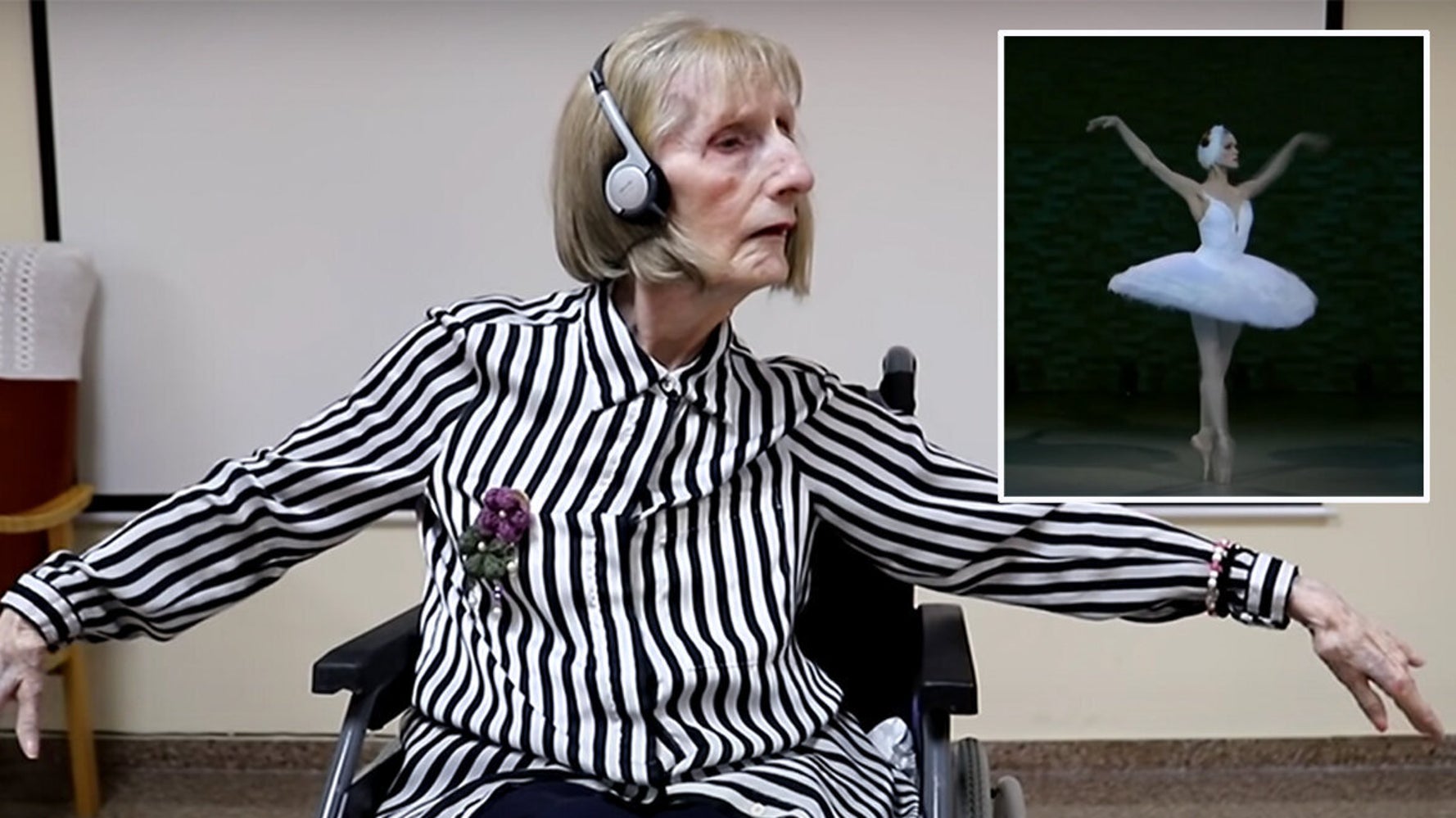
Marta C Gonzalez’s experience demonstrates the powerful impact that music may have, even in the face of Alzheimer’s. It serves as a reminder that the beauty of art, as well as its ability to evoke memories and emotions, is genuinely ageless and universal.