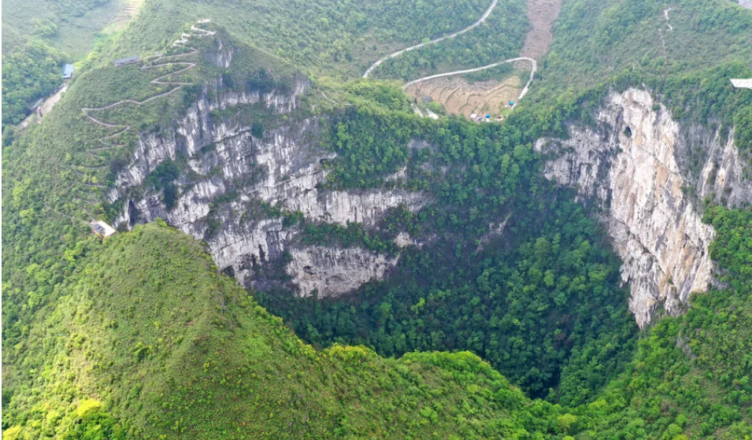
Earlier this month, cave scientists in South China discovered a primeval forest at the bottom of a massive sinkhole. Sinkholes like this are often known as Tiankeng, or “heavenly pits,” in Chinese.
The sinkhole, at 630 feet deep, would cover the Washington Monument and then some. The pit’s bottom has an ancient forest about three football fields long, with trees reaching over 100 feet high. According to the Chinese government, it is one of the country’s 30 largest sinkholes.
Cave explorers found the hole near Ping’e hamlet in Leye County, Guangxi Zhuang Autonomous Region, South China. According to a Guangxi press statement, a team of explorers plunged into the hole and discovered old trees and other plant life.
According to the US Geological Survey, karst is a kind of terrain that is perfect for geological marvels, such as the sinkhole in Leye County, which is formed by groundwater eroding the limestone rock under the surface. Karst landscapes cover around 20% of the United States, including attractions like Carlsbad Caverns in New Mexico and Mammoth Cave in Kentucky.
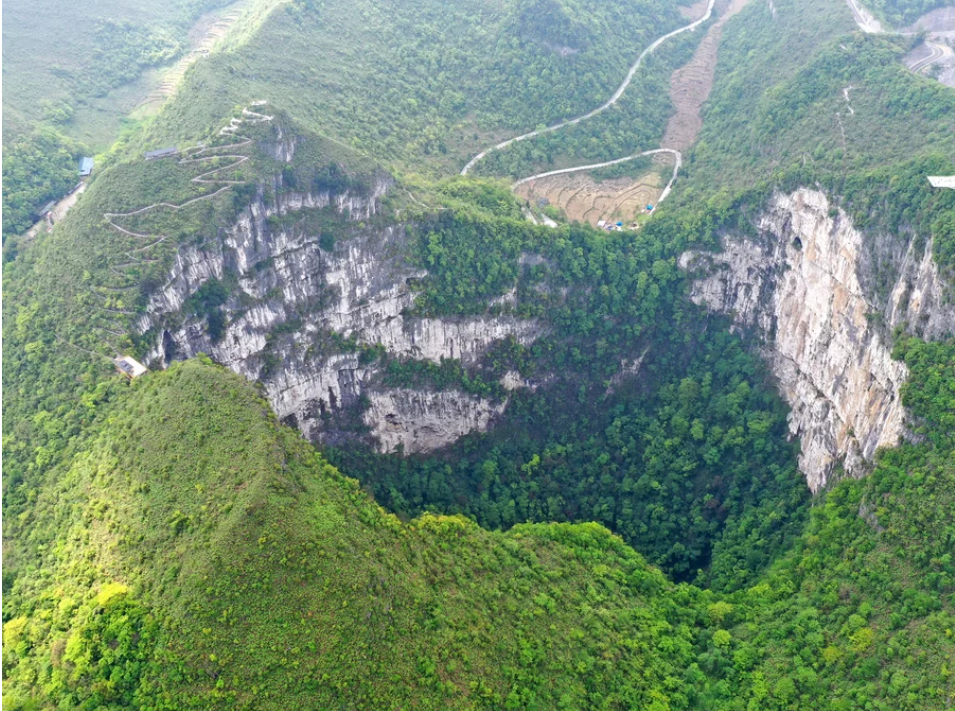
NASA says that about 13% of China is made up of karst terrain, and the Guangxi area is a great example of its beauty.
George Veni, who is in charge of the National Cave and Karst Research Institute, says that the size and shape of karst landforms depend on the environment.
“There’s this extremely aesthetically amazing karst in China with big sinkholes and giant cave openings and so on,” Veni said. “In other places of the globe, you may go out on the karst and not see anything. Sinkholes may be relatively small, measuring just a meter or two in diameter. Cave entrances may be incredibly narrow, requiring you to squeeze your way in.