We now know that, while a star’s mass is a significant part of stellar evolution, so is its chemical makeup.
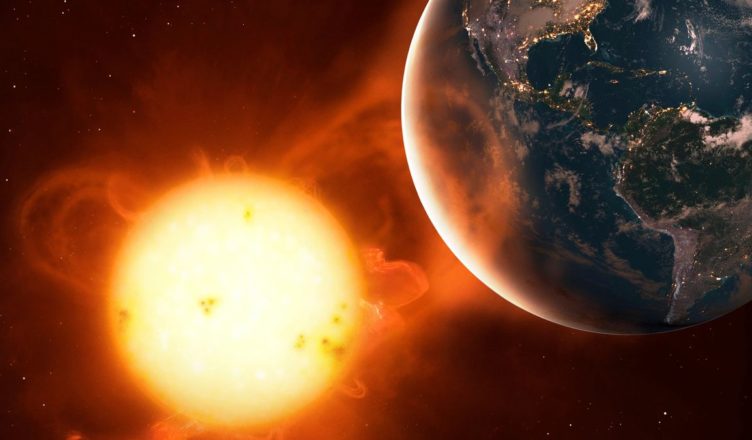
OUR SUN IS DEAD. After billions of years, the Sun will run out of hydrogen fuel and rise to the size of a red giant before contracting to the size of a white dwarf. It’s an old story, and one astronomer has known about it for decades. We now have a far better understanding of the Sun’s future thanks to the most recent Gaia data.
Human civilization’s timeline is a little blip in the lifespan of a star. We haven’t lived long enough to see the birth, life, and death of a star. However, we may learn about stellar evolution by monitoring other stars that are either older or younger than the Sun. It’s similar to how looking at a collection of images shot at the same time on a single day might help you comprehend how humans live and die.
In the early 1900s, one of the first photographs of star evolution was taken. Ejnar Hertzsprung invented it as a data table in 1905, but Henry Norris Russell popularized it as a visual in 1914. They illustrate the color or spectral class of a star vs its absolute magnitude and are today known as Hertzsprung-Russell diagrams, or HR diagrams. The temperature of a star is measured by its color, while its size is measured by its absolute magnitude.
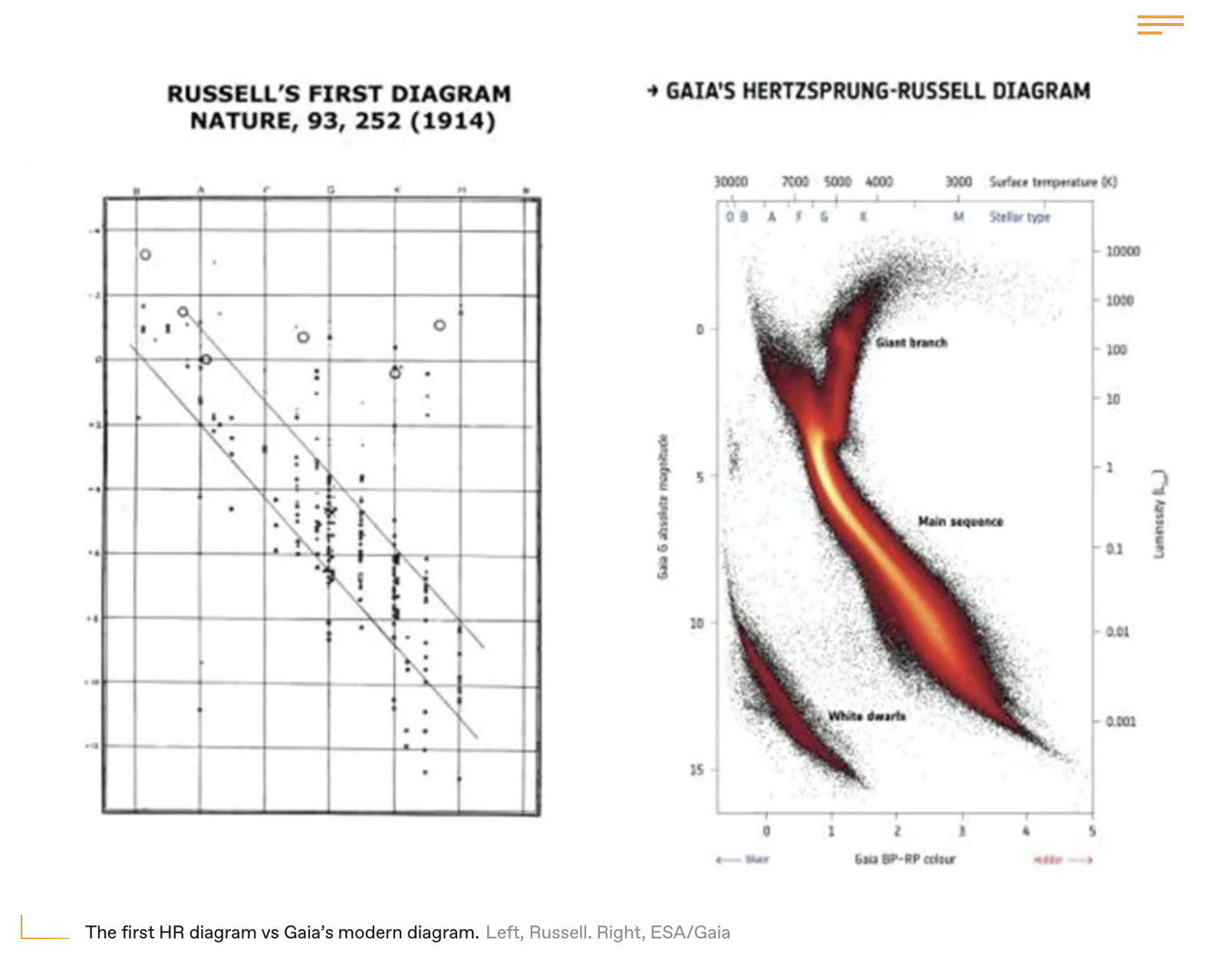
Even though the early HR diagrams only provided data for roughly 300 stars, it was evident that most stars followed a linear course known as the main sequence. Because the majority of stars are in the main sequence, it stands to reason that stars spend the majority of their lives as main sequence stars. Small stars light at low temperatures, whereas larger, more massive stars burn at higher temperatures.
The HR diagrams revealed that some stars, such as red giants, were huge but cool, while others, known as white dwarfs, were small and hot. With additional data, astronomers may discern how larger main sequence stars entered a gigantic stage before becoming white dwarfs or neutron stars. A star’s mass, in general, dictates its lifetime and fate.
We now know that, while a star’s mass is a significant part of stellar evolution, so is its chemical makeup. Two stars with comparable masses but differing compositions can have drastically different lifetimes. The Gaia survey comes into play here.
Unlike earlier stellar surveys, which contained hundreds or thousands of stars, Gaia has over a billion. The Gaia team developed an HR diagram of more than 4 million stars within 5,000 light-years of Earth in the most recent data release. We know not just the size and spectrum temperature of these stars but also their chemical composition.
This means that the Gaia team could generate an HR diagram of stars with a mass and composition similar to the Sun. The outcome shows the progression of Sun-like stars from the main sequence to red giants. Statistics show that the Sun will reach its highest temperature when it is 8 billion years old. After that, it will go through the red giant phase before dying at around 11 billion years.
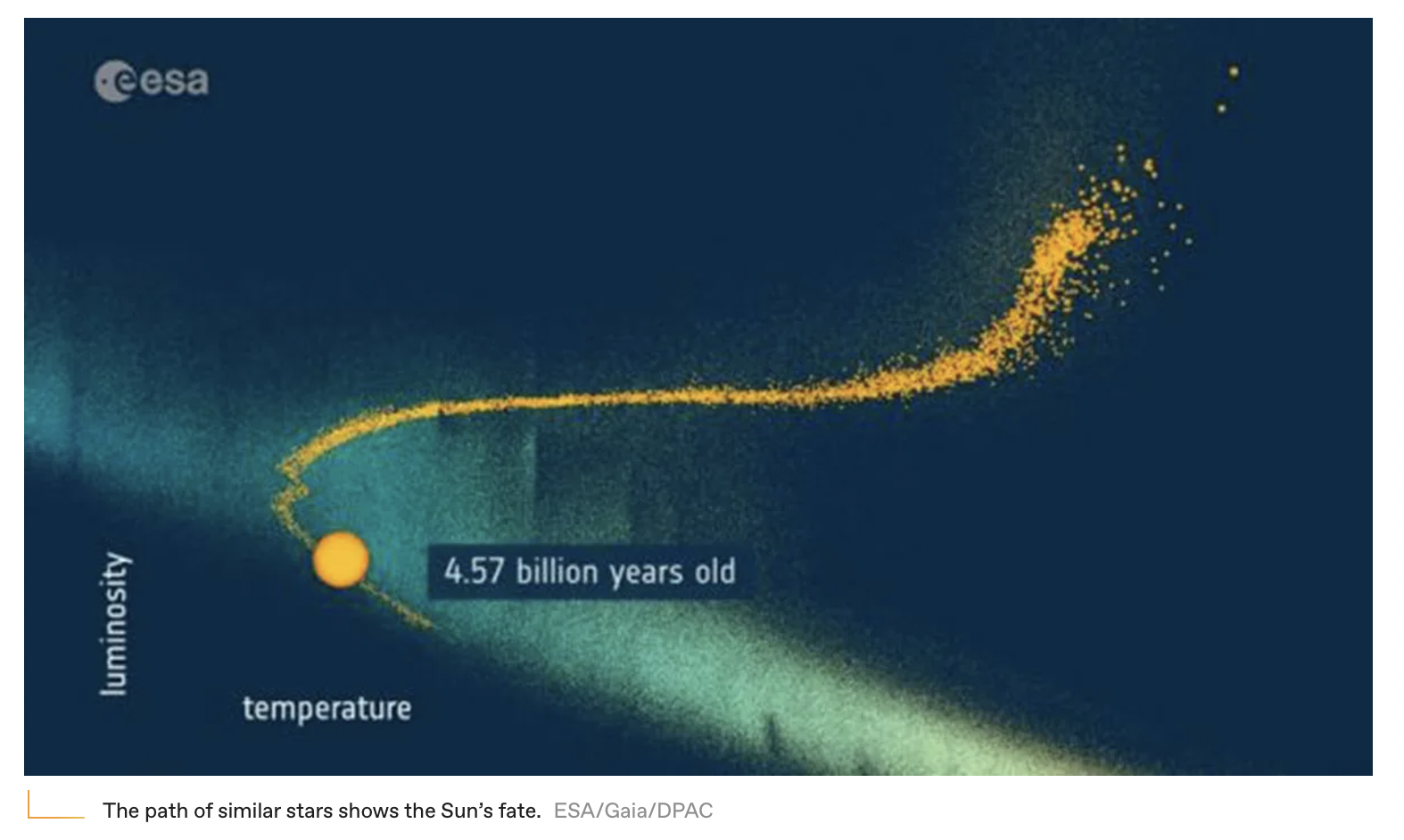
The Gaia team also discovered over 6,000 stars that are nearly identical to the Sun in terms of mass, temperature, chemistry, and age. Astronomers will have a better idea of whether our Sun is typical or not by watching these stars. Do these other stars, for example, have solar cycles like the Sun? Do they have times of tremendous solar flares like the Sun, or are they rather stable?
With so much data acquired, Gaia is exposing new facts about our own star, how it may behave in the near future and how it may die in the far future. We’ve known for a long time that the Sun’s death is near, but we’re only now learning how and when it will happen.